Do Stray Cats Envy Our Pampered House Cats? The Surprising Truth
Watching a scrawny stray stare at your fat, warm cat through the window, you might wonder: is it jealous? Science and a closer look at the feline mind reveal a more practical reality.
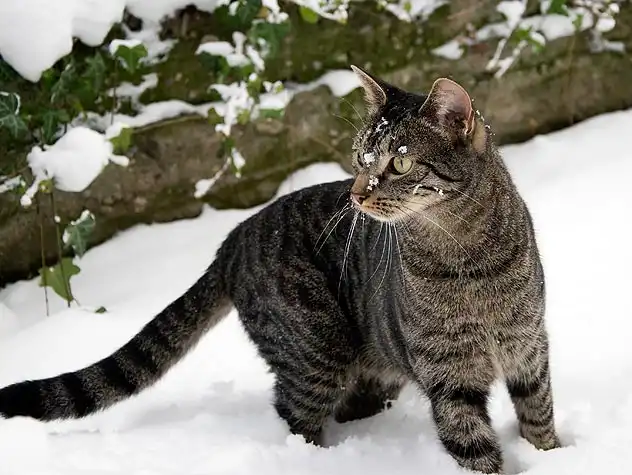
It's the middle of winter. The wind's howling outside, and there's this scrawny yellow stray that's always huddled by the flower bed downstairs. Its fur is matted, its ribs show, and its eyes are locked on my window.
Inside, my chubby orange tabby, 'Da Fu' (Great Fortune), is sprawled next to the radiator, purring in his sleep. His tail flicks lazily. Beside him sits a bowl of imported kibble and a pile of plush toys.
The stray doesn't move. It just stares, its eyes wide. Is it watching Da Fu's cozy life with a pang of envy? Is it thinking, "Why does that guy have it so good?" Or is it seething with jealousy, cursing its own rotten luck?
Cats and Humans: A Long History
Cats have been hanging around us for thousands of years. They started out wild, hunting mice in the African deserts. When humans began farming and grain stores attracted rodents, cats saw an opportunity. A partnership formed, and slowly, they became the semi-domesticated companions we know today.
Genetically, house cats and their wild cousins aren't that different. They're what we call "semi-domesticated." They've still got that independent, cunning wild streak—they're not clingy like dogs. And that independence shapes how they see the world.
A house cat's life is cushy. Gourmet meals on schedule, vet visits when sick, central heating in winter, and a human on call for entertainment. The average indoor cat lives 12 to 15 years, with some pushing 20. That's longer than a lot of stray cats ever dream of.
The Stray's Reality
According to a 2021 report from the World Organisation for Animal Health, there are over 100 million stray cats globally. Their lives are a daily grind: scrounging for food in alleys and dumpsters, constantly on alert. Their average lifespan is a heartbreaking 2 to 5 years. Disease, traffic, predators, and extreme weather are constant threats.
So, when that stray stares into your warm living room, is it truly feeling envy or jealousy?
First, we need to understand what's going on in a cat's head. Scientifically, feline emotions are simpler than ours. They experience basic feelings—fear, contentment, annoyance—that's well-documented.
A 2015 study from the University of Lincoln, published in the journal Animal Behaviour, observed that cats can read human facial expressions. Smile, and they might rub against you. Scowl, and they'll keep their distance. This shows they have emotional perception.
But complex social emotions like "envy" or "jealousy" require self-awareness and comparative thinking. Cats likely don't have the hardware for that.
As Dr. Katherine Houpt, a professor of animal behavior at Cornell University, explained in a 2022 interview, a cat's brain is smaller and simpler, wired first and foremost for survival instinct.
That stray staring at Da Fu probably isn't pondering the unfairness of the universe. It's more likely assessing the territory, looking for a food opportunity, or just being curious.
For instance, a 2019 study from the University of Tokyo used cameras to track stray cats. They often lingered near houses with pets, but their behavior was mostly sniffing and observing—not showing signs of aggression or anxiety. This looks more like resource reconnaissance than emotional jealousy.
No Time for Drama
Truth is, a stray cat's daily life is too busy for abstract emotions. They spend upwards of 10 hours a day just searching for food, often going hungry. When it's cold, they shiver. They're always watching for dogs, cars, and hostile humans.
Meanwhile, Da Fu's biggest concerns are "Why hasn't the human petted me yet?" or "Where did that laser dot go?" It's pure hedonism.
We often project the word "jealousy" onto cats. When a house cat hisses because you're holding another cat, science calls that "resource guarding." They're not jealous of the affection; they're worried their share of food, territory, or attention is under threat.
It's the same on the streets. When two strays fight over a scrap of meat, it's a survival battle, not a drama of passion. We have to be careful not to judge animal behavior by human standards. A cat is simple and direct: hungry? Find food. Tired? Sleep. Danger? Run.
The Other Side of Freedom
Let's not romanticize the stray life, but let's not pity it entirely either. Strays have something many house cats crave: freedom. An indoor cat's world is limited by four walls. A stray roams, explores, and lives by its own wild rules.
A 2018 paper from the University of Bristol analyzed cat behavior and suggested that free movement can increase a cat's well-being—provided it's safe.
But that freedom comes at a huge cost. Over 30% of stray cats die from infectious diseases like feline distemper or parasites. Indoor cats, with their vaccines and regular check-ups, are protected. So, the stray isn't jealous of the house cat; its harsh environment simply doesn't allow it the luxury of such complex feelings. It's too busy trying to survive.
The Takeaway
The stray cat staring through your window isn't green with envy. It's just a creature navigating a tough world, maybe looking for its next meal or a bit of shelter from the cold.
So next time you see one, instead of wondering what it's feeling, consider a simple, practical act of kindness. Leave out a bowl of water. Offer some spare food. Contact a local rescue if you can. Or, if circumstances allow, maybe even open your door.
This article is based on observational science and behavioral studies. It is not intended as veterinary or professional behavioral advice. For concerns about stray animals or pet behavior, consult with appropriate professionals.
Enjoy this article?
Complete this article to earn points!
Earn +50 points by completing this article.
Sign in to earn points when you complete articles.
Must-have Picks


Tags
Comments
Recommended Reading
- Aegean Cats : Why These Seaside Cats Rarely Get Stressed5 min read
- Top 10 Most Confident Cat Breeds5 min read
- Why Some Cats Stress So Easily: Understanding Shy and Sensitive Cats5 min read
- Traveling with Cats: A Practical Guide to Reducing Stress on Your Feline Friend5 min read
- I Thought Cat Stress Was Exaggerated… Until My Cat Started Trembling and Breathing Fast5 min read